


Weather-Resilient Wealth Planning in Tucson
Wealth Planning, Tucson Arizona, Retirement Income, Business Owners
Monsoons, Markets, and Money: A Tucson-Focused Guide to Weather‑Resilient Wealth Planning
How Southern Arizona’s extreme weather, transit changes, and local economy in 2026 are reshaping the way Tucson business owners and families should think about risk, liquidity, and long-term income planning.
Why “Weather‑Resilient Wealth Planning” Is a Trending Tucson Topic in 2026
In June 2026, Tucson residents have been talking about more than just markets and interest rates. Local headlines have centered on extreme monsoon storms and flash flooding, including multiple swift‑water rescues along the Santa Cruz River after powerful storms on June 17–18, 2026, as reported by KYMA. At the same time, the region is managing extreme heat, elevated fire risk, and variable monsoon rainfall across Southern Arizona, according to the National Weather Service’s 2026 Monsoon Outlook.
For high‑net‑worth families, business owners, and estate trustees in Tucson, Oro Valley, Catalina Foothills, and Marana, these conditions are more than background noise. They directly affect:
Property and business risk during monsoon and fire season
Liquidity needs for repairs, deductibles, and temporary disruptions
Estate and succession planning when key assets are concentrated in local real estate or closely held companies
💡 Planning Insight: In our experience at Global Investment Strategies, the most resilient Southern Arizona families treat weather, infrastructure, and regional economic trends as inputs to their income strategy—not afterthoughts to address once a crisis hits.
Local Conditions Shaping Southern Arizona Wealth Decisions in 2026
1. Monsoon Storms, Fire Weather, and Property‑Heavy Balance Sheets
Many Tucson and Pima County families hold a meaningful portion of their net worth in desert real estate, ranch land, or income properties. When June storms bring flash flooding, downed power lines, and water rescues—as they did in 2026—those concentrated positions become operational risks as well as financial ones.
From a planning standpoint, Doug McClure and Jay Clifford typically encourage clients to evaluate three structural questions with their legal and tax advisors:
Are key properties titled and insured in a way that aligns with Arizona’s community property rules and your estate intentions?
Do you maintain dedicated liquidity reserves for higher deductibles, uninsured losses, or temporary business closures during monsoon or fire events?
Is there a clear, documented plan for who makes decisions if a property or business is suddenly impaired?
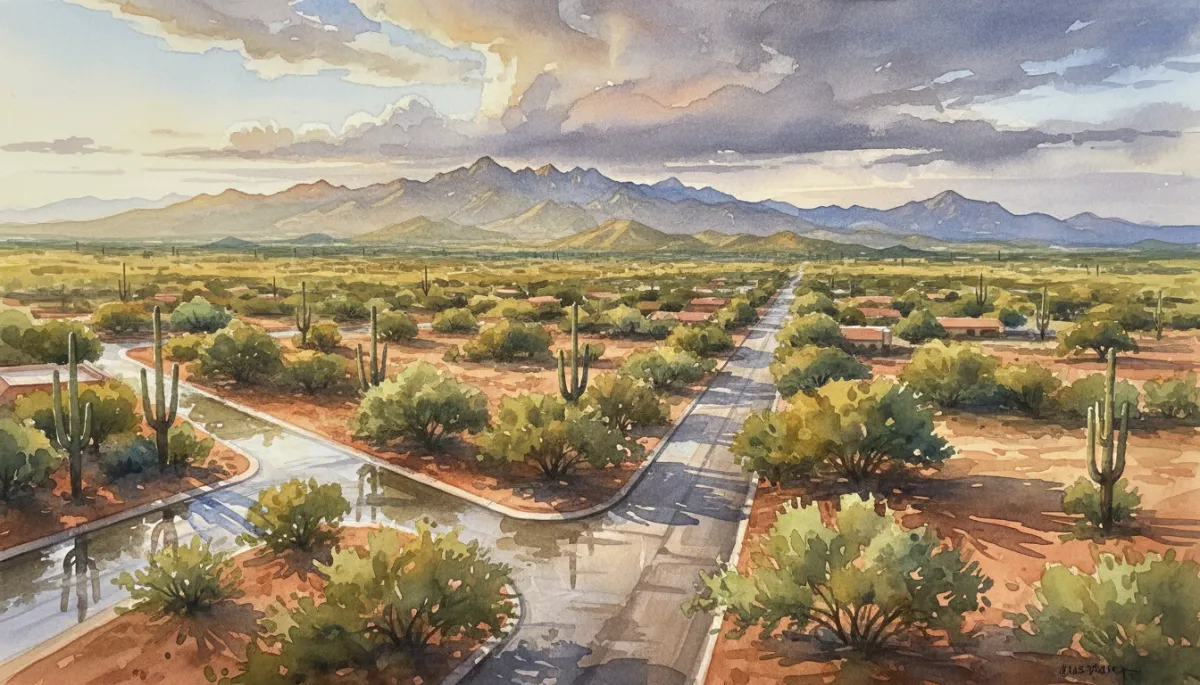
Concentrated real estate wealth in Tucson demands coordinated liquidity and risk planning around monsoon season.
2. Transit, Infrastructure, and Business Continuity
In June 2026, Tucson’s City Council approved a multi‑million‑dollar transit safety plan, adding cameras, private security, and off‑duty officers to Sun Tran routes.3 At the same time, labor tensions and the potential for a driver strike have raised questions about service reliability and commuting patterns for employees across the metro area.4
For business owners, this is not just a transportation story. It feeds directly into:
Payroll and staffing risk if employees cannot reliably reach job sites or offices during weather or transit disruptions
Business valuation when potential buyers evaluate operational resilience as part of an eventual exit or succession plan
Global Investment Strategies often collaborates with clients’ CPAs and attorneys to map these operational realities into structured retirement income strategies and business owner transition plans, rather than treating them as separate conversations.
3. A Stagnant Yet Resilient Job Market and Multi‑Generational Planning
Mid‑2026 labor data show Tucson employment holding roughly flat at around 404,000 non‑seasonally adjusted jobs, with unemployment near 4.9%—about a point higher than last year.5 Healthcare and government remain relatively stable, but overall growth is subdued. For high‑net‑worth families, this backdrop influences decisions about:
Supporting adult children or grandchildren whose careers are tied to local employers
Whether to retain, sell, or recapitalize local businesses in anticipation of a softer hiring environment
Here again, the goal is not to “time” the Tucson job market, but to build income structures that can adapt if family members experience career volatility or if a business exit takes longer than expected.
Arizona‑Specific Tax and Estate Rules: A Quiet Advantage in Volatile Years
Coordinating Income with Arizona’s Flat Tax and Capital Gains Subtraction
While storms and local infrastructure grab headlines, Arizona’s tax structure quietly shapes long‑term outcomes. As of 2026, Arizona applies a 2.5% flat individual income tax and allows a 25% subtraction for certain long‑term capital gains from Arizona sources, subject to state rules and definitions.6 For retirees drawing from taxable portfolios, or business owners planning a sale, the timing and character of income can materially affect after‑tax cash flow.
In practice, Doug and Jay often coordinate with clients’ tax professionals to:
Sequence withdrawals across taxable, tax‑deferred, and tax‑free accounts using IRS life expectancy tables and SSA benefit data as structural guides, not predictions.
Explore how Arizona’s capital gains subtraction might interact with a future real‑estate or business sale, under the guidance of the client’s CPA
Community Property, Probate, and the Absence of a State Estate Tax
Arizona’s community property regime and the absence of a separate state estate tax can be powerful tools when coordinated correctly. For many Tucson couples, the way assets are titled—community vs. separate property, individual vs. trust—affects both step‑up in basis treatment at death and how smoothly assets move through or around the Arizona probate process.9
A weather‑resilient plan does not stop at insurance or emergency savings. It also considers:
Whether key real estate and business interests are properly integrated into your estate and legacy coordination documents
How successor trustees and personal representatives will manage local assets if a storm, health event, or death occurs at an inopportune time
Building a Weather‑Resilient Income Strategy for Tucson Families
From Headlines to an Actionable Planning Checklist
Taken together—monsoon volatility, transit and infrastructure updates, a cautious job market, and Arizona‑specific tax rules—2026 is a reminder that local context matters. For many Global Investment Strategies clients in Tucson, Oro Valley, Catalina Foothills, and Marana, a practical next step is to review:
Emergency liquidity: Do you have a clearly defined reserve for weather‑related and operational shocks, distinct from long‑term investment capital?
Income map: How will required minimum distributions, Social Security, and business or rental income interact with Arizona’s flat tax and capital gains rules over the next 10–20 years?
Governance: Who is empowered—legally and practically—to make decisions if a storm, health event, or market dislocation occurs while you are out of town or incapacitated?
How Global Investment Strategies Fits into Your Advisory Team
Global Investment Strategies is intentionally structured as a strategic income coordinator for Southern Arizona families—not a replacement for your attorney or CPA. Doug McClure and Jay Clifford bring a planning process that:
Translates local realities—like Tucson’s monsoon patterns, infrastructure changes, and job market trends—into an integrated income and distribution strategy
Coordinates with your legal and tax advisors so that Arizona community property rules, probate considerations, and state tax provisions are reflected in the structure of your plan
📌 Key Takeaway: In Tucson, “risk” is not just market volatility. It is also monsoon season, transit reliability, and the way Arizona law treats your property, businesses, and heirs. A resilient plan acknowledges all three.
Ready to Talk About Your Tucson‑Focused Income Strategy?
If you are a business owner, multi‑generational family, or estate trustee in Tucson, Oro Valley, Catalina Foothills, or Marana, the events of June 2026 are a timely prompt to revisit your planning. A private conversation with Global Investment Strategies can help you translate today’s local realities into a clearer, more durable income architecture for the next several decades.
To explore how a weather‑resilient, Arizona‑specific income strategy might look for your family, you can request a private income strategy call with Doug or schedule a confidential second‑opinion review of your current plan.
1 KYMA, “Strong storms cause issues in Tucson area,” June 18, 2026.
2 National Weather Service, “2026 Arizona Monsoon Outlook.”
3 KOLD, “Taking a closer look at Tucson’s new transit safety plan,” June 11, 2026.
4 AZ Luminaria, reporting on Sun Tran ambassador program and labor tensions, June 2026.
5 TucsonHIRED, “Tucson Job Market Update: Mid-2026 Hiring Trends,” June 25, 2026.
6 Arizona Department of Revenue, individual income tax guidance, accessed 2026.
7 IRS Publication 590-B and related RMD life expectancy tables, irs.gov.
8 Social Security Administration, benefits information, ssa.gov.
9 Arizona Revised Statutes and Arizona Judicial Branch probate resources, azcourts.gov.
⚠️ Important: Global Investment Strategies does not provide tax or legal advice. All state‑specific strategies should be reviewed and implemented by your qualified tax advisor and attorney. Our role is to coordinate the income architecture around those professional opinions.